
Introduction to Tirupati Balaji Temple
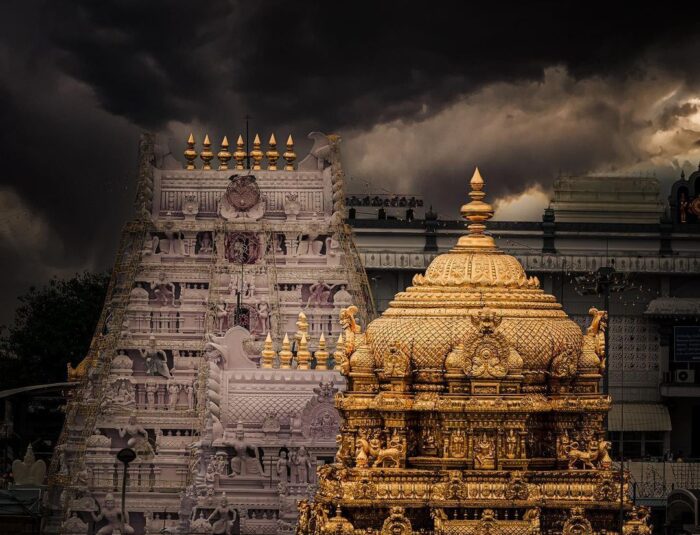
The Tirupati Balaji Temple, also known as the Sri Venkateswara Swamy Temple, is not just a place of worship it is a living symbol of faith, devotion, and divine mystery. Located on the sacred Tirumala Hills in Andhra Pradesh, this ancient temple attracts millions of devotees every year from across the world.
For centuries, pilgrims have believed that Lord Venkateswara listens to every prayer and never sends a true devotee empty-handed. From its legendary history and mysterious idol to its sacred rituals and breathtaking hill routes, Tirupati Balaji stands as one of the most powerful spiritual centers on Earth.
How to get to Tirumala after reaching Tirupati? (For Air, Railway, and Bus travelers)
Tirupati is the main base town for the Tirumala pilgrimage. Whether you arrive by flight, train, or bus, you will ultimately reach Tirupati city. From Tirupati Airport, Railway Station, and Central Bus Stand – all three locations offer very easy, safe, and well-managed facilities to reach Tirumala. Therefore, even first-time visitors face no difficulties.
If you arrive in Tirupati by air:
Tirupati Airport (Renigunta) is approximately 15-16 kilometers from the city. As soon as you exit the airport, you can easily find APSRTC (Andhra Pradesh State Transport) buses going to Tirumala. These buses run throughout the day and take you directly to the Tirumala Bus Stand.
If you prefer not to travel by bus, prepaid taxis or private cabs are also available. It takes approximately 45 minutes to 1 hour to reach Tirumala by cab, but the journey is a bit slower due to speed limits on the ghat road.
If you arrive by train:
Tirupati Railway Station is located in the central part of the city. APSRTC buses to Tirumala are readily available right outside the station. Besides this, shared autos, private autos, or cabs are also easily available.
Traveling by bus is considered the safest, cheapest, and the most preferred option approved by the Tirumala Trust, which is why most devotees choose this route.
If you arrive in Tirupati by bus,
If you have already alighted at the Tirupati Bus Stand, then going to Tirumala becomes even easier. Special buses to Tirumala depart from the bus stand itself. There is a separate ticket counter there, and the staff will explain the further process to you.
Tirupati to Tirumala – Bus, Cab and Ghat Road experience
APSRTC’s Tirumala buses operate 24/7 and take you directly to the Tirumala Bus Stand. The ghat road is extremely scenic, with lush green hills, dense forests, and winding hairpin turns that give the journey a unique spiritual feel. The buses are driven by experienced drivers, making the journey completely safe. Both normal buses and Srivari buses are available.
If you prefer to travel by cab, you can hire a private cab from Tirupati, but there are speed restrictions and checkpoints on the ghat road. Due to certain regulations applicable to private vehicles, a cab might be more expensive and slightly inconvenient compared to the bus.
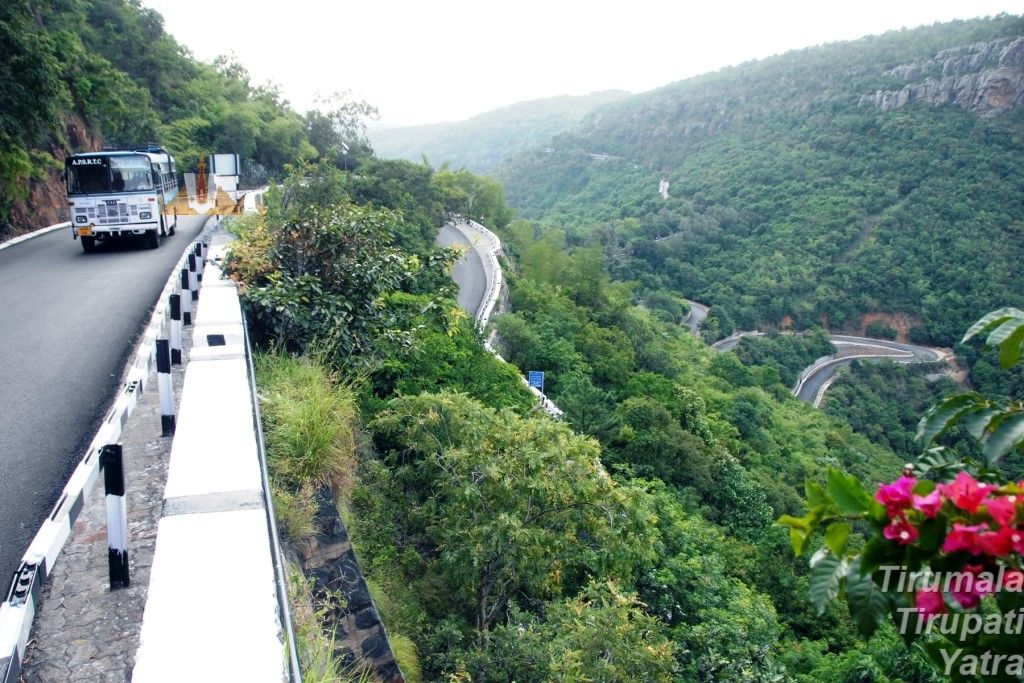
How to reach Tirumala by foot? (Alipiri / Srivari Mettu)
The most sacred and revered way to reach Tirumala is by walking up the steps. Many devotees choose this path as a vow.
The Alipiri Footpath starts from Tirupati and has over 3550 steps. It takes approximately 3 to 4 hours to complete this journey on foot. The journey is made relatively easy by the availability of drinking water, medical help, roofed shelters, and resting points along the entire route.
Srivari Mettu is another option, considered shorter and more comfortable. This route has over 2400 steps and allows you to reach Tirumala in about 2 to 2.5 hours. Necessary facilities and amenities are well-provided on both routes for ladies, senior citizens, and general devotees.
What are the checking and security arrangements like?
Tirupati Balaji Temple is a highly secured spiritual destination. Vehicle checking is conducted on the ghat road, and plastic, alcohol, and tobacco are completely banned. Security checks are also performed on the footpath route. Luggage scanning is compulsory upon reaching Tirumala. Mobile phones, purses, and essential items are allowed, but it’s best to avoid carrying unnecessary items.
Accommodation arrangements in Tirumala – Trust Quarters (TTD Rooms)
Tirumala Tirupati Devasthanams (TTD) provides very clean, safe, and affordable accommodation for devotees in Tirumala. Rooms are available from the Trust at rates of ₹100, ₹200, ₹500, and ₹1000. The ₹100–₹200 rooms are basic.
How to book accommodation in Tirumala?
Online booking can be done through the official TTD website. Selecting the date and providing an ID proof like Aadhaar is required. Since rooms are limited, booking in advance is safer.
If online booking is not possible, an offline room can be obtained from the CRO (Central Reception Office) upon reaching Tirumala, but availability is limited during peak season, and ID proof is compulsory.
What is the Tirupati Balaji Darshan like? (Complete Guide)
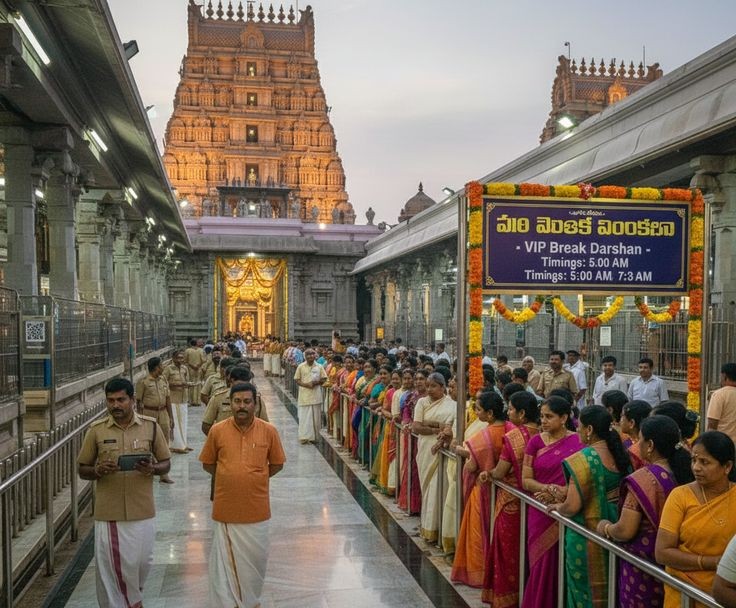
The main purpose of visiting Tirupati Balaji Temple is to have a darshan (sight) of Lord Venkateswara (Balaji). The darshan system is very disciplined, secure, and well-planned to manage millions of devotees. The entire system is designed in such a way that even first-time visitors receive proper guidance.
There are mainly three types of darshan available in Tirumala:
Sarva Darshan (Free Darshan)
- This is the free darshan for general devotees. If there is a large crowd, the waiting time can be 6 to 12 hours or even more. The darshan line goes through the Vaikuntham Queue Complex, where seating, water, toilets, and announcements are available.
2 . Sheeghra Darshan (₹300 Darshan)
This is the most preferred type of darshan. Devotees with a ₹300 ticket get darshan in a comparatively shorter time. In a normal crowd, darshan can be completed in 2 to 4 hours, but the time may increase during the peak season.
3. VIP Darshan
This darshan is for special people or those with a recommendation letter. It is not easily available for general devotees.
- Important instructions for Darshan
It is mandatory to wear traditional and decent clothing when going for Darshan. For men, dhoti/pant-shirt and for women, saree or salwar-kameez are considered preferable. Entry may be denied if you wear sleeveless tops, shorts, or inappropriate clothing.
The Real History Behind Tirupati Balaji Temple
A long time ago, an incident occurred in Vaikuntha between Goddess Lakshmi and Lord Vishnu. According to some stories, Sage Bhrigu placed his foot on Vishnu’s chest, and Vishnu did not consider it an insult, but Goddess Lakshmi was deeply offended. She felt that Vishnu had not upheld her honor. For this reason, Goddess Lakshmi left Vaikuntha and came to Earth.
Vishnu was distraught by Lakshmi’s absence. Without his wife, even Vaikuntha seemed meaningless to him. Therefore, he took an avatar on Earth and came to the Tirumala hills to perform penance in search of Lakshmi. He accepted solitude in the dense forests and mountains and settled there. This avatar later came to be known as Sri Venkateswara.
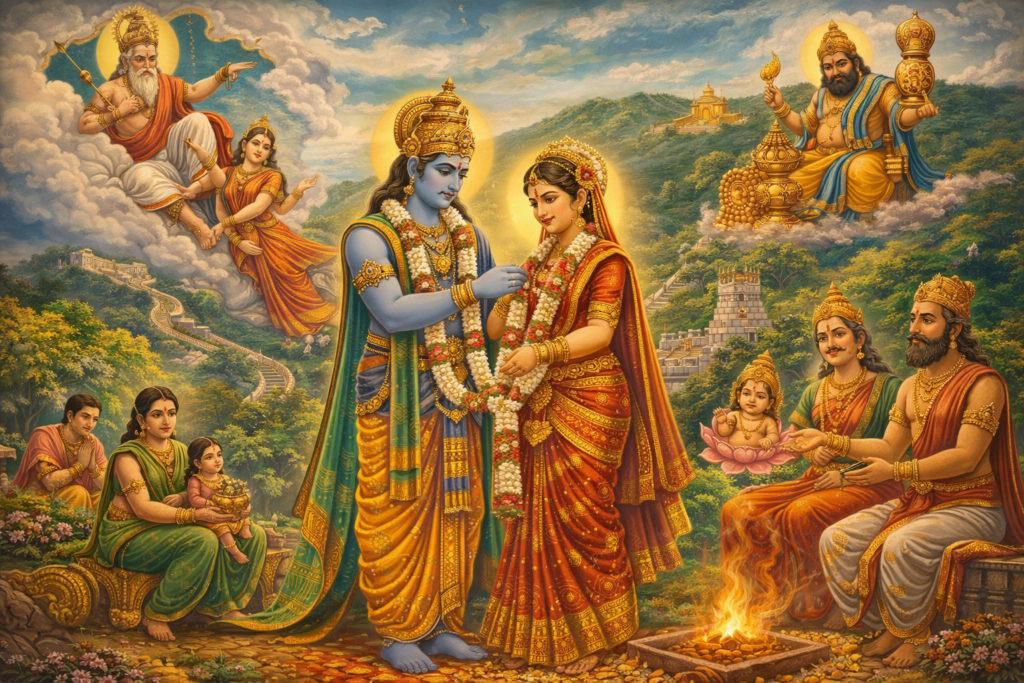
During this time, there was a righteous king named Akasharaja on Earth. He and his wife, Dharmadevi, were childless. One day, while wandering in the forest, they found a baby girl in a lotus flower. They named the girl Padmavati and raised her as their own daughter. Padmavati is considered to be an earthly incarnation of Goddess Lakshmi. Time passed. One day, while Lord Venkateswara was hunting, he saw Padmavati, and love blossomed between them. Later, with Akasharaja’s consent, a grand wedding was arranged between Venkateswara and Padmavati.
This wedding was extremely grand, but it required a large amount of wealth. Therefore, it is believed that Lord Venkateswara borrowed money from Kubera, the god of wealth. It is believed that this debt is to be repaid until the end of Kali Yuga. That is why devotees believe that the donations they make today are given to repay the Lord’s debt.
After this marriage, Lord Venkateswara settled on the Tirumala hills and, according to belief, continues to reside there even today for the welfare of his devotees.
The Untold Mystery of the Tirumala Balaji Idol
The idol of Lord Venkateswara, also known as Balaji, in Tirumala is not just a simple stone statue, but is considered a mysterious and divine enigma by devotees even today. This idol has remained unchanged for hundreds of years, and many wondrous stories are told about it. The first thing that is noticeable is that the idol does not behave like ordinary stone. When touched or during the anointing ceremony, many priests feel that it is warm, as if it were alive. Even though the atmosphere in the temple’s sanctum is cool, the idol is always slightly warm, which is why a sandalwood paste is applied to it daily. Interestingly, after this sandalwood paste is removed, it is completely wet and warm, giving many the experience that the idol is generating heat from within.
The hair of the Balaji idol is also considered a great mystery.
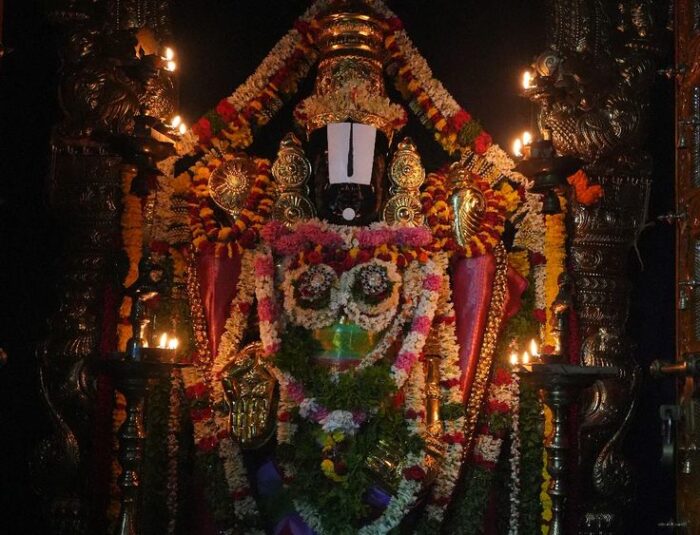
It is said that the hair is real and never gets tangled or dry. Due to this belief, millions of devotees offer their hair at Tirumala, as they believe that the deity himself possesses hair. A constant moisture is felt near the idol’s ears, which is attributed to the belief that Balaji is still listening to the prayers of his devotees. Therefore, many devotees consider the idol to be a living deity. The ornaments adorning the idol are fitted so precisely that they cannot be removed, and it is believed that attempting to remove them could damage the idol.
Another mysterious aspect is the eyes of the Balaji idol. These eyes are said to be extremely radiant. Previously, there was a belief that if one looked directly into the eyes, the lamp would extinguish or some misfortune would occur; hence, even today, the eyes are not kept fully open during the Aarti (ritual of waving lamps). According to the experiences of some priests, during the Abhishek (ritual bathing of the idol), they feel a pulse-like sensation on the idol, creating the feeling that the idol is not merely an object of worship but is alive. It is also believed that there is a mysterious presence behind the idol in the Garbhagriha (sanctum sanctorum), which is why the priests never go completely behind the idol.
Although all these mysteries have not been fully proven by science, centuries of tradition, the experiences of millions of devotees, and unwavering faith make the Tirumala Balaji idol one of the most mysterious and miraculous idols in the world. Therefore, the darshan (sight) of Balaji is not limited to merely seeing with the eyes, but becomes an unforgettable experience of the mind, faith, and spiritual peace.
Places to Visit in Tirumala Beyond Balaji Temple – A Complete Guide
Tirumala is not only known for the sacred Sri Venkateswara Temple but also for its spiritually rich surroundings and naturally beautiful places that enhance the pilgrimage experience. One of the most important places to visit is Sri Vari Paadaalu, believed to be the spot where Lord Venkateswara first set foot on Tirumala Hills. Devotees visit this place with deep reverence, as it offers a peaceful atmosphere and a divine connection.
Another significant place is Akasa Ganga, a sacred waterfall where temple priests collect holy water daily for the Lord’s rituals. It is believed that the water here is pure and spiritually powerful. Nearby lies Papavinasanam, where devotees take a holy dip with the belief that their sins are washed away. The natural beauty of flowing water combined with religious faith makes this place truly special.
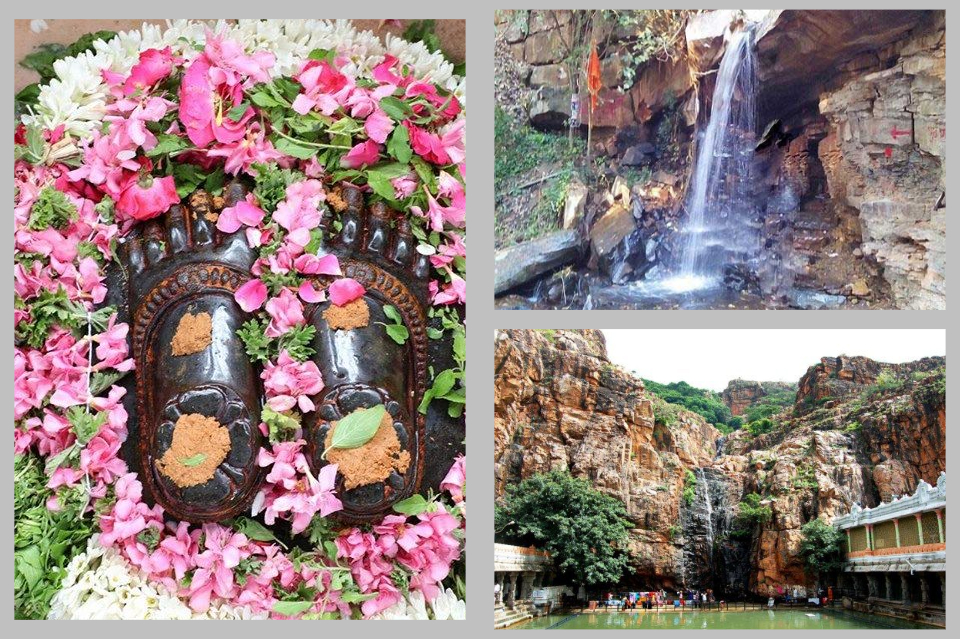
For those interested in mythology, Japali Teertham holds great importance. It is associated with Sage Anjaneya (Hanuman) and is surrounded by dense forests, offering a calm and meditative environment. Similarly, Tumbhuru Teertham is considered one of the oldest teerthams in Tirumala and is believed to be visited by celestial beings.
Tirumala also offers serene viewpoints such as Srivari Padalu View Point and nearby forest paths, where devotees can experience the calmness of nature while enjoying panoramic views of the hills. These locations allow visitors to slow down, reflect, and absorb the spiritual energy of Tirumala beyond temple darshan.
Overall, exploring Tirumala gives pilgrims a deeper understanding of why this sacred hill is considered the earthly abode of Lord Venkateswara. The blend of mythology, devotion, and natural beauty makes Tirumala a complete spiritual journey, not just a single temple visit.
The final darshan in Tirupati: Govindaraja Swami and Padmavathi Devi
After having the divine darshan of Lord Venkateswara at Tirumala, the devotees’ return journey concludes in Tirupati. According to tradition, it is considered highly auspicious to first visit the Govindaraja Swamy Temple after descending from the hills. This temple is dedicated to Lord Vishnu in his elder form and is the spiritual center of Tirupati city. While visiting this temple, devotees express their gratitude for their entire pilgrimage and offer prayers to the Lord with a peaceful mind.
Devotees express their gratitude to God, feeling that their wishes have been fulfilled. These final darshans at Tirupati bring peace of mind and provide a beautiful conclusion to the sacred journey to Tirumala. For many devotees, this moment is memorable for a lifetime and inspires them to return again.
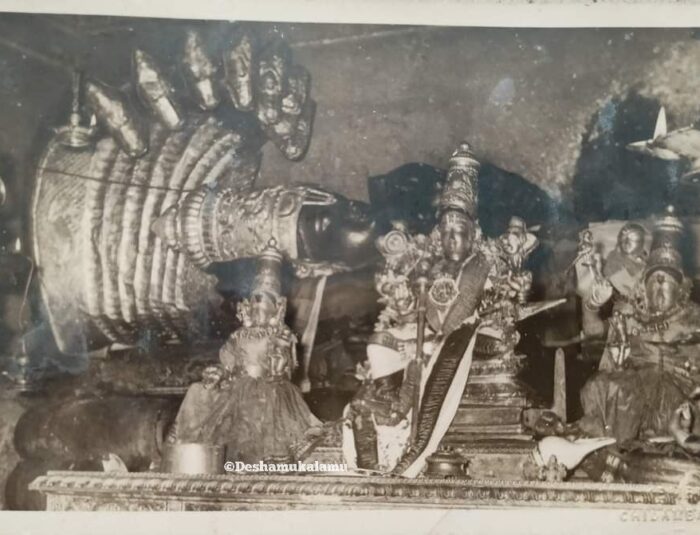
After visiting Govindaraja Swamy, devotees visit the Padmavathi Ammavari temple to have darshan of the goddess. Goddess Padmavathi is considered an earthly incarnation of Mahalakshmi and is the consort of Sri Venkateswara. Devotees believe that visiting this temple brings happiness, prosperity, and marital bliss to the family. These two sacred darshans complete the pilgrimage to Tirumala, and devotees return home with contentment, devotion, and positive energy. Devotees thank the deities for fulfilling their wishes and pray for proper guidance in life. This final darshan in Tirupati instills immense peace, faith, and a feeling of devotion in the hearts of the devotees, inspiring them to return to Tirumala again.
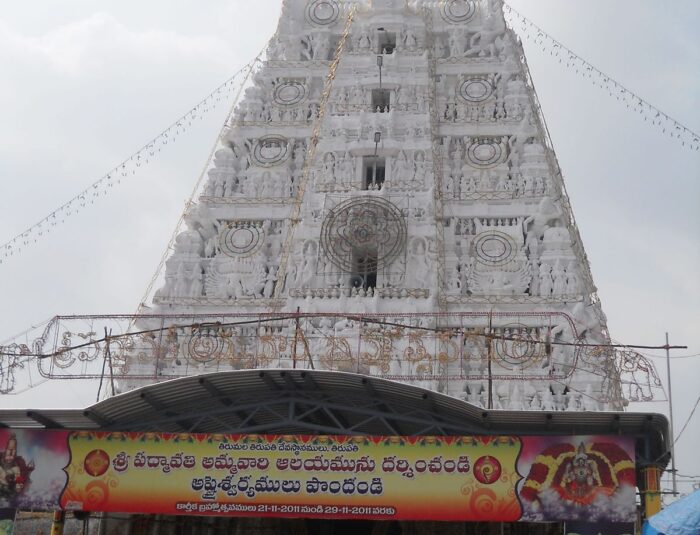
The pilgrimage to Tirupati Balaji is a journey of faith and spiritual fulfillment. The darshan (viewing of the deity) ends, but the Lord’s grace and the feeling of devotion remain forever in the heart.
If you found this article helpful, please share it with your family and friends and spread the experience of the divine journey to Tirupati Balaji to others.
If you are interested in Sikh history, read our detailed guide on Five Takhts of Sikhism.
Maharashtra has one of the 12 sacred Jyotirlingas of Lord Shiva. Read more about Grushneshwar Jyotirlinga Temple here.
Read our detailed guide on Ujjain Mahakal to learn about its spiritual importance, rituals, and sacred history.
