Every year on 26 January, India celebrates Republic Day, one of the most important national festivals of the country. For many people today, Republic Day means a public holiday, watching the parade on television, flag hoisting ceremonies, or school functions with patriotic songs. But the real meaning of Republic Day of India goes far beyond celebration. It is a day deeply connected to sacrifice, struggle, bloodshed, and the idea of India as a free and democratic nation.
Republic Day is not just about remembering history; it is about understanding why India exists the way it does today and why the Indian Constitution is the backbone of our freedom.
India Before Republic Day: A Nation Without Freedom or Rights
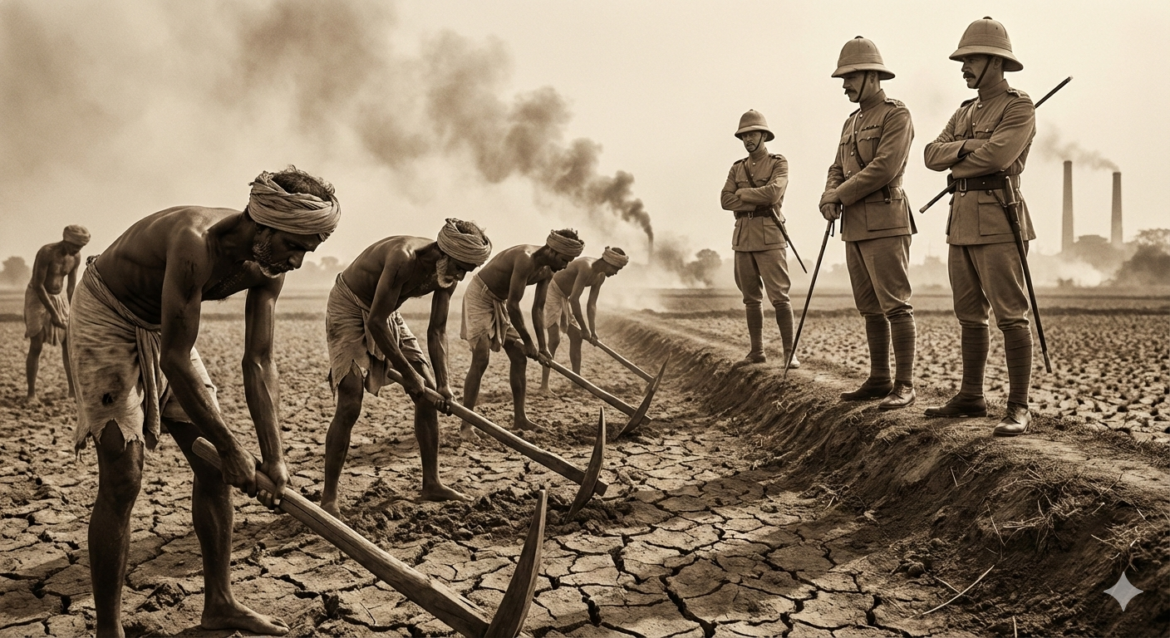
Before independence, life in India under British rule was marked by inequality and injustice. Indians had no real political power, no constitutional rights, and no control over their own land. British laws existed mainly to benefit colonial rulers, not Indian citizens. Farmers were exploited, industries were destroyed, and Indian voices were silenced.
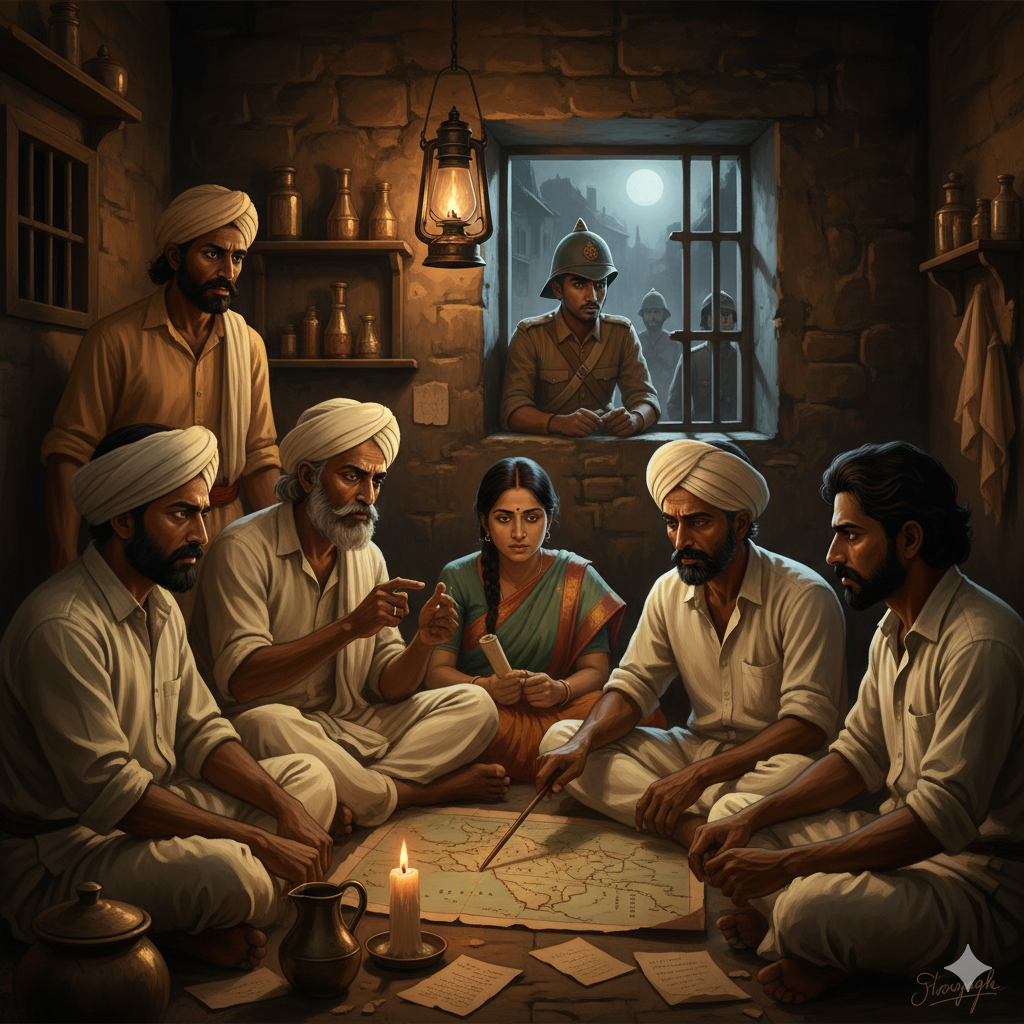
At that time, there was no concept of equality before law for Indians. Peaceful protests were answered with violence, arrests, and brutal punishment. Speaking against the government could cost someone their freedom or their life. India was not just ruled; it was controlled.
Yet, despite oppression, the spirit of resistance never died.
26 January 1930: The Birth of “Purna Swaraj”
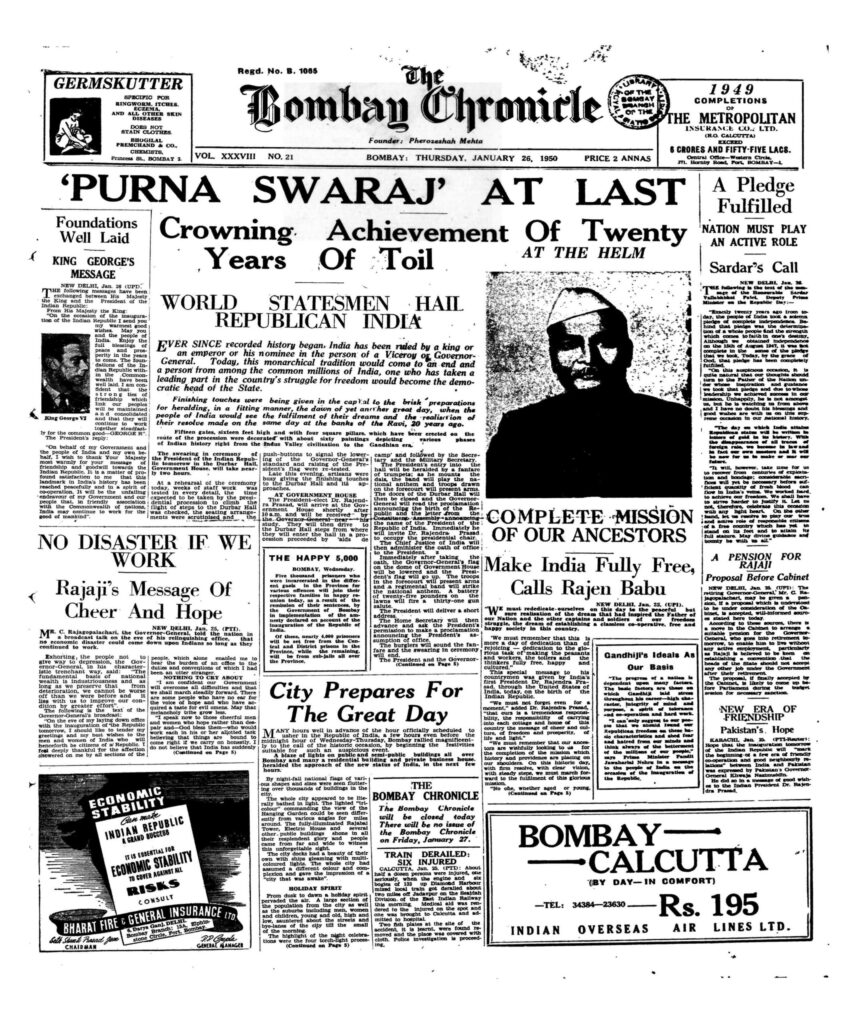
The importance of 26 January history begins long before 1950. In December 1929, during the Lahore Session of the Indian National Congress, Indian leaders took a historic decision. They rejected the idea of limited self-rule and declared Purna Swaraj, meaning complete independence from British rule.
On 26 January 1930, Indians across the country celebrated this declaration. The tricolor flag was hoisted, people took pledges of freedom, and the message was clear: India would no longer accept slavery in any form.
Although independence was still years away, 26 January became a powerful symbol of resistance and self-respect. For the next seventeen years, Indians remembered this date as the day they officially demanded full freedom.
Freedom Fighters and the Price Paid for Republic Day
When we talk about Why Republic Day is celebrated, we must talk about sacrifice. Freedom did not come peacefully or easily. Thousands of freedom fighters were imprisoned, tortured, and killed. Many names are written in history books, but millions remain unknown.
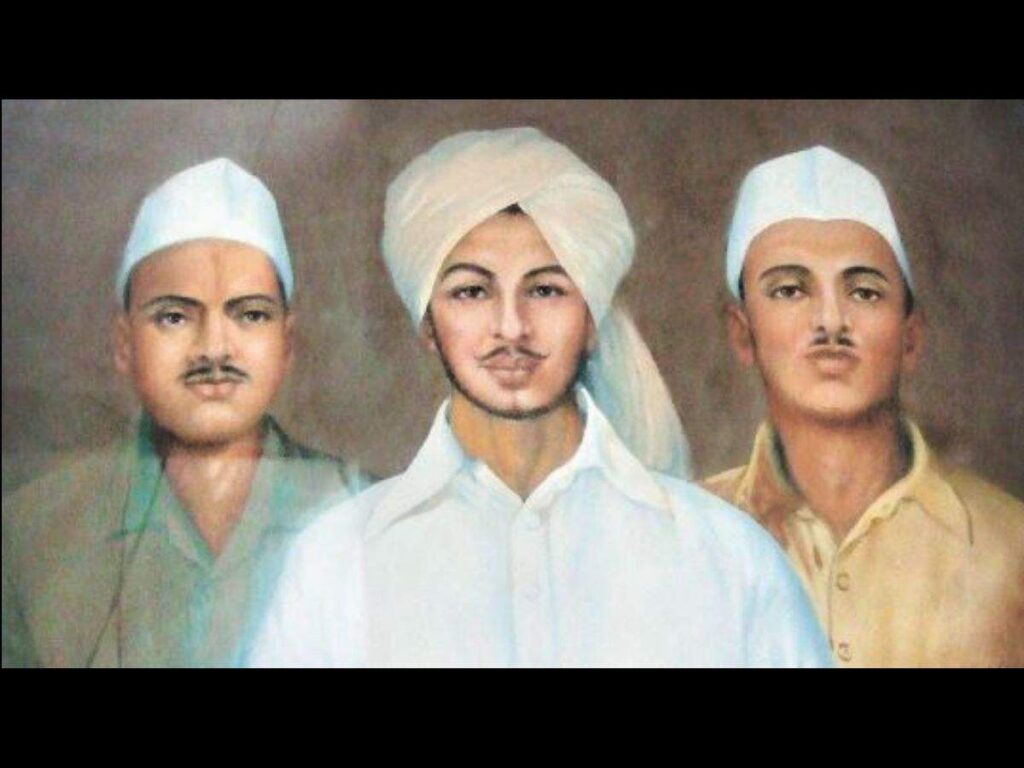
Revolutionaries like Bhagat Singh, Rajguru, and Sukhdev sacrificed their lives at a young age. Leaders like Mahatma Gandhi faced imprisonment again and again. Countless ordinary Indians—farmers, workers, students—stood up against British rule knowing the risks.
Republic Day exists because people were willing to die for an idea: a free India governed by its own people. That sacrifice gives meaning to every celebration we see today.
Independence Was Not Enough: Why India Needed a Constitution
India finally gained independence on 15 August 1947, but true freedom was still incomplete. The country was still functioning under British-made laws. There was no Indian Constitution to protect citizens or define democracy.
Without a Constitution, independence could have collapsed into chaos. India needed a legal and moral framework that guaranteed rights, equality, and justice. That responsibility was given to the Constituent Assembly of India.
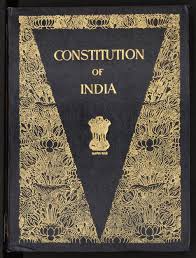
Dr. B. R. Ambedkar and the Making of the Indian Constitution
One cannot talk about Republic Day of India without honoring Dr. B. R. Ambedkar, the chief architect of the Indian Constitution. Having personally experienced discrimination, Ambedkar understood why laws must protect the weakest members of society.
The Constitution took nearly 3 years to complete. Every article was debated, discussed, and refined. The goal was not just governance, but dignity. The Constitution promised fundamental rights, democracy, secularism, and social justice.
It was adopted on 26 November 1949, but came into force on 26 January 1950, to honor the historic Purna Swaraj declaration.
26 January 1950: India Becomes a Republic
On 26 January 1950, India officially became a Republic. The British monarch was removed as head of state, and Dr. Rajendra Prasad became the first President of India. Power shifted from colonial rulers to the people of India.
This moment changed everything. Indians were no longer subjects—they became citizens. The Constitution gave people rights, but also responsibilities. Democracy was no longer an idea; it became a living system.
That is why 26 January Republic Day is considered the true beginning of modern India.
Republic Day Parade: More Than Just a Celebration
The Republic Day parade held in New Delhi is not merely ceremonial. It represents India’s unity, diversity, and strength. The parade showcases the Indian Armed Forces, cultural heritage of different states, and technological achievements.
Gallantry awards honor soldiers and civilians who show extraordinary courage. These moments remind us that sacrifice did not end in 1947. Even today, people lay down their lives for the nation.
Why Republic Day Is Still Important in Modern India
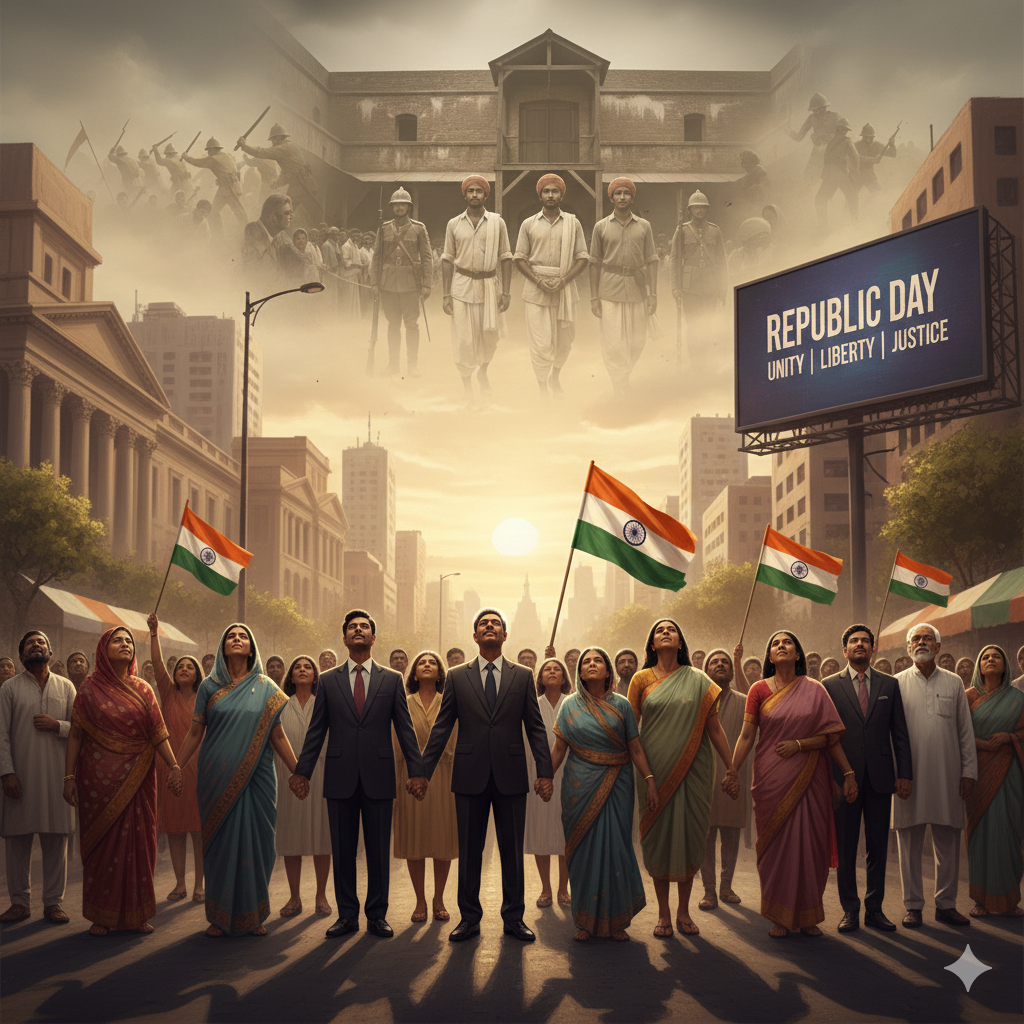
In today’s digital and fast-paced world, freedom is often taken for granted. Republic Day reminds us that democracy survives only when citizens are aware, responsible, and united.
The Indian Constitution protects freedom of speech, religion, equality, and justice. But these rights exist only when people respect them. Republic Day is a reminder that freedom without responsibility can destroy itself.
At a time when divisions threaten societies worldwide, Republic Day calls Indians back to constitutional values.
Republic Day Is Not a Holiday, It Is a Promise
26 January Republic Day of India is not just about flags and parades. It is about remembering the past, understanding the present, and protecting the future.
It exists because people believed India deserved dignity. It survives because citizens uphold democracy. Republic Day reminds us that India’s strength lies not in power, but in principles.
When the national flag rises on 26 January, it carries with it sacrifice, struggle, and hope.
Republic Day matters because freedom matters.
Jai Hind 🇮🇳
Frequently Asked Questions (FAQ) – Republic Day of India
Q1: Why is Republic Day celebrated on 26 January?
A: 26 January was chosen to honor the historic Purna Swaraj declaration of 1930, when India first demanded complete independence from British rule. It connects India’s struggle for freedom with the adoption of the Constitution in 1950.
Q2: Who was the first President of India?
A: Dr. Rajendra Prasad became the first President of India on 26 January 1950, when India officially became a Republic.
Q3: What is the significance of Republic Day?
A: Republic Day marks the moment India became a sovereign, democratic republic. It symbolizes the transfer of power from colonial rulers to the people, the establishment of the Constitution, and the guarantee of rights and duties for all citizens.
Q4: How is Republic Day celebrated in India?
A: Republic Day is celebrated with a grand parade in New Delhi showcasing India’s cultural diversity and military strength. Across the country, schools and offices host flag hoisting, patriotic songs, speeches, and cultural programs. Gallantry awards are presented to soldiers and civilians who show exceptional courage.
Q5: Who was responsible for drafting the Indian Constitution?
A: The Constitution was drafted by the Constituent Assembly of India, with Dr. B. R. Ambedkar as the Chairman of the Drafting Committee. The process took nearly three years, ensuring justice, equality, and democracy for all citizens.
Q6: What is the difference between Independence Day and Republic Day?
A: Independence Day (15 August 1947) marks the end of British rule, while Republic Day (26 January 1950) marks the day India adopted its Constitution and became a sovereign republic with an elected head of state.
Q7: Why is the Constitution important for India?
A: The Constitution guarantees fundamental rights, equality, freedom, and justice. It provides a framework for governance and protects the country from misuse of power, ensuring that India remains a true democracy.
Q8: How many people sacrificed their lives for India’s independence?
A: Millions of Indians sacrificed their lives, including freedom fighters like Bhagat Singh, Rajguru, Sukhdev, and countless unnamed individuals who protested, fought, and died for India’s freedom. Their sacrifices make Republic Day meaningful.
Q9: What are some iconic events during the Republic Day parade?
A: The parade features military displays, colorful tableaux representing different states, cultural performances, flypasts by the Air Force, and the awarding of gallantry medals to heroes of India.
Q10: Why should every Indian remember Republic Day today?
A: Republic Day is a reminder of freedom, responsibility, and unity. It inspires citizens to uphold constitutional values, respect diversity, and contribute to the nation’s progress. It is not just a celebration but a reflection of India’s democratic soul.